How to Pass Mandatory Fire Door Drop Tests in Philadelphia
Fire door drop tests are not optional in Philadelphia. They are required under NFPA 80, the national standard for fire doors and other opening protectives, and they are enforced locally by the City of Philadelphia Department of Licenses and Inspections. A failed test affects life safety, code compliance, and operations. It can also halt a certificate of occupancy emergency commercial door repair or trigger a notice from L+I. The good news is that passing is straightforward when the door, release equipment, and documentation are handled like any other critical building system.
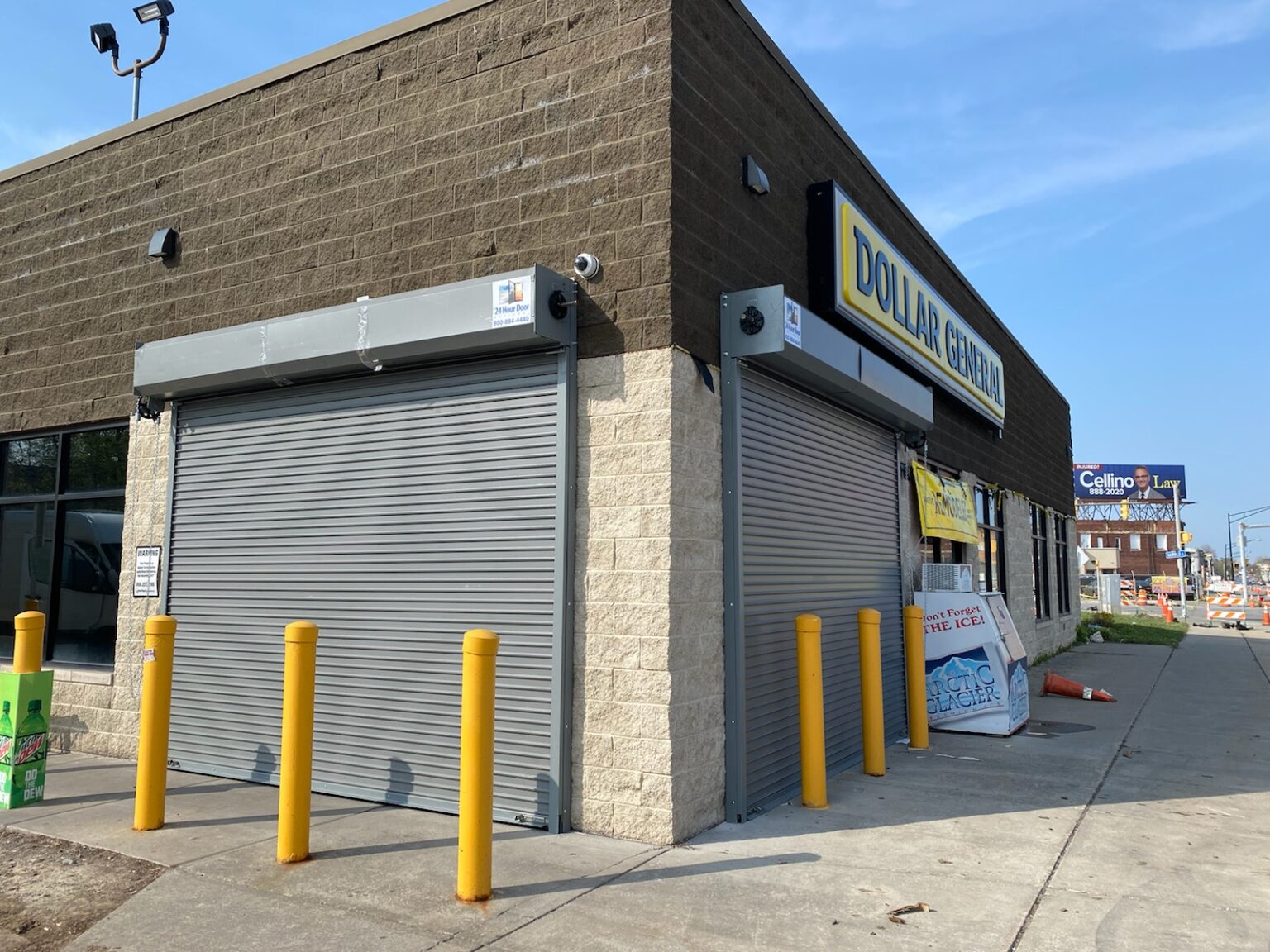
Most drop tests in Philadelphia involve rolling steel fire doors. A rolling steel fire door is a steel curtain that coils above the opening and drops by gravity to seal a fire separation when a release device activates. The release device is the trigger that lets the door close during an alarm or heat event. It can be a fusible link, which is a small metal connector that melts at a set temperature and releases the door, or an electrically released mechanism tied to the building fire alarm. A governor is the speed controller. It is a brake and gear device that keeps the curtain moving at a safe, controlled rate specified by NFPA 80. A bottom bar is the reinforcing member at the bottom of the curtain that contacts the floor and helps seal the opening. Passing a drop test confirms that all of these parts work together as designed.
Why this matters on Philadelphia properties
Philadelphia’s building stock is diverse. Rolling fire doors protect loading dock penetrations in South Philadelphia warehouses, elevator lobbies in Center City towers, cafeteria servery openings in university buildings, pharmacy counters in hospital campuses, and corridor separations in older mixed-use buildings. Facilities in 19102, 19103, 19106, and 19107 see heavy foot traffic and frequent construction projects that disturb fire alarm wiring and release circuits. Shops along East Passyunk Avenue and South Street operate under tight hours and cannot absorb a surprise failure that shutters service bays or kitchen pass-throughs.
Local conditions also play a role. Philadelphia sits in a mixed-humid climate with long, hot summers and a winter freeze-thaw pattern that is among the highest of any major metro in the Northeast. The city often sees on the order of 50 to 60 freeze-thaw events in a typical season. That cycle drives grime and road salt into door guides at docks and alley openings. It accelerates surface rust at sills and angles. Nor’easters and remnant tropical systems push wind-blown grit under guide angles. All of this affects the governor, the chain and sprocket, and the guide alignment that determine whether a door closes smoothly under gravity during a test.
What a fire door drop test actually verifies
A proper drop test under NFPA 80 is not a quick pull of a chain. It is a functional test with documentation. The test verifies that the door closes fully when the release is activated, that the closing speed is controlled by the governor, that the door may be reset same day commercial door repair after the test per the manufacturer’s instructions, and that all signs and labels remain intact and legible. For electrically released systems that tie to the fire alarm, the test confirms that the door drops upon alarm signal and also under loss of power, where required by the release device listing. For doors using fusible links, it confirms that the link is correctly installed, not painted over, and of the correct temperature rating for the space.
NFPA 80 requires annual inspection and testing for fire door assemblies. That includes the rolling fire door curtain, barrel, end locks, guides, hood, governor, release device, and signage. The inspection step precedes the test. Any obvious defect is remedied before attempting a drop, because a test on a door that cannot pass can damage parts or trap staff behind a partially closed curtain. That is why most successful Philadelphia programs schedule a pre-test check at least a few days prior to the witnessed test window.
Where drop tests most often apply across the city
In Center City office and retail buildings along Market, Chestnut, Walnut, and Broad Streets, rolling fire doors protect elevator lobbies and service corridors that connect rated stair towers to tenant floors. At health care facilities around Penn Medicine, Jefferson Health, CHOP, and Temple Health, they secure pharmacy counters and back-of-house corridors where compartmentation is required. In the I-95 logistics corridor, the Navy Yard, and Tioga Marine Terminal areas, they protect dock penetrations that open to rated corridors or between warehouse compartments. In restaurants and cafeterias from University City to Old City and Queen Village, fire-rated counter shutters guard kitchen pass-throughs to dining areas. Each of these locations sees different contaminants and cycle profiles, but they all face the same test requirement.
Philadelphia failure patterns that put a drop test at risk
Doors fail the test here for predictable, local reasons. A governor that has not been exercised binds after months of exposure to grit, which is common on alleys in 19106 Old City and 19147 Bella Vista. Fusible links at dock doors collect paint during tenant fit-outs and cannot release at the rated temperature. A contractor replaces a fire alarm panel in a 19103 office tower and leaves the door release relay unwired. A chain hoist drags because the spring brake is out of adjustment. Guide angles at a South Philadelphia warehouse fill with salt and debris swept in from wet lots, which makes the curtain chatter and stall. A bent bottom bar from forklift contact hangs on the floor at one end and robs the door of the clean, square landing needed to complete the cycle.
None of these failures are exotic. All of them are preventable under a simple program of cleaning, alignment, and device checks in advance of the annual test window.
What inspectors and L+I look for during the test
The annual test has two parts. First is the visual and mechanical inspection of the assembly against NFPA 80. Labels must be present and legible on the curtain or hood. Clearances and guide engagement must match manufacturer instructions. Fasteners must be tight and the barrel seated. Release devices must be listed for use with the door and wired per listing if electric. The second part is the operational test. The door must close completely from the fully open position under the release without human help. Closing must be controlled by the governor, not by a person pulling or slowing the curtain. The reset process must follow the manufacturer’s method. Repeated drops are often performed to confirm reliability and speed control.
Documentation is not an afterthought. NFPA 80 calls for recording the location, door label information, test date, defects found and corrected, and the results of the test, along with the name of the qualified person performing the work. Philadelphia L+I expects to see that record during audits or inspections that arise from complaint calls or permit close-out activities.
Brands and hardware common on Philadelphia fire doors
Rolling fire door assemblies across the city often carry nameplates from Cornell and Cookson, Hormann, and legacy Cookson lines found in post-industrial conversions from Kensington to Brewerytown. Many facilities also operate rolling steel service doors that are not fire rated. A rolling steel service door is similar in form but lacks the listed fire protective features and the release equipment. The test requirement applies to listed fire doors. Where high-speed roll-up doors are installed nearby for dock cycle efficiency, such as Rytec or Albany Doors units, they often sit adjacent to a separate rolling fire door that carries the rating and test obligation.
Release devices range from simple fusible links to electric releases that integrate with the building fire alarm. The interface panel, when present, must be compatible with the door release, and wiring must be protected from damage. Governors come in different designs, but all serve the same purpose of speed control. A governor that is loud, bounces, or chatters during closure is a repair candidate in advance of testing. Bottom bars need to sit squarely and often carry seals that improve smoke resistance across the floor line. Even where smoke-rated components are not specified, a square landing makes testing and reset far cleaner.
The ties to swinging fire doors and egress hardware
Many buildings manage both rolling fire doors and swinging fire-rated doors. Swinging fire-rated doors are the doors in frames that you walk through. They carry their own inspection under NFPA 80 and NFPA 101 and do not undergo drop tests, but they must self-close and latch. On pairs, a door coordinator, which is a device that controls the closing order of door leaves, keeps the leaf with the astragal closed last to allow proper latching. If a rolling fire door closes across a path of egress, the building must have an alternate, code-compliant exit path per IBC Chapter 10. This is why coordination with property management and life safety teams matters before the test window. It eliminates unintended egress issues during drills and real events.
Simple planning moves that make a pass likely
Passing is about preparation, not luck. A qualified commercial door contractor should perform a pre-test mechanical review. That visit cleans the guides, checks the governor, confirms the release device wiring or fusible links, inspects fasteners, and measures the closing path for obstructions. Coordination with the fire alarm vendor matters when release devices depend on alarm relays. The alarm vendor confirms that the supervised circuit and relay are assigned and operational. Property staff should plan access to both sides of each door and notify tenants of the test window. Where a rolling fire door protects an opening that supports active business operations, such as a cafeteria servery or pharmacy, schedule the test during off-peak hours and stage security staff if needed to maintain separation during drops.
- Obstructions in the closing path, such as conduit, pallet stops, or temporary framing at docks Painted or incorrect-temperature fusible links that will not release when heated Unwired or miswired release circuits after a fire alarm panel or device replacement Dirty guides and damaged end locks that cause binding during closure Governor malfunction that allows uncontrolled speed or noisy, jerky descent
Philadelphia properties that operate on busy retail corridors like Walnut Street, Chestnut Street, South Street, East Passyunk Avenue, and Frankford Avenue often see the highest daily cycles on nearby service doors and dock doors, even if the fire door itself drops only during tests. That activity drives dust and debris into the areas around the fire door that can interfere with a clean test. A quick vacuum and wipe of guides and sills in the week before testing pays off.
How documentation and labeling keep L+I satisfied
Philadelphia L+I inspections often follow two triggers. The first is a permit close-out in a space near a fire separation. The second is a complaint or a periodic audit in larger occupancies. In both situations, the inspector asks for test records. That folder should include the annual NFPA 80 rolling fire door test form, any deficiency reports and corrections, and current labels on the door and hood. Labels must remain legible. If labels are missing or unreadable, consult the manufacturer or a qualified contractor to determine if field labeling or replacement sections are required.
For multi-site operators across 19104 University City, 19148 South Philadelphia, 19125 Fishtown, and 19154 in the Far Northeast, centralizing test records is worth the small effort. It avoids re-tests, reduces time spent with inspectors, and gives facility leaders clear renewal dates. It also ties into broader commercial door repair programs, because the same vendor can combine the annual rolling fire door test with NFPA 80 inspections of swinging fire doors and checks on panic exit devices, which are the push bars that allow quick egress on rated exits.
Why Philadelphia climate and usage patterns change the maintenance math
Few major metros force so much variation on door hardware in a single year. Summer in Philadelphia brings long stretches above 90 degrees with high humidity that encourages surface corrosion in unconditioned docks. Winter then drives cold snaps that contract steel guides and push meltwater and salt into every seam. The city’s frequent freeze-thaw cycles stress floor lines and threshold grout. Industrial dust around the Port of Philadelphia, Tioga Marine Terminal, and the I-95 corridor adds abrasive grit. All of this makes a governor and release linkage that lived quietly for eleven months wake up cranky when the test call arrives.
That is why a spring maintenance visit often adds more value here than in milder markets. Cleaning, lubrication, fastener checks, and a quick exercise of the mechanism during April or May clear summer’s residue and catch early corrosion before the first hard frost. In busy facilities, a fall follow-up ahead of heating season closes the loop. The cost of those visits is modest compared with after-hours emergency commercial door repair if a fire door refuses to reset after a failed test during peak operations.
Where rolling fire doors intersect other entrance systems
Many Philadelphia buildings also run automatic entrances at the same access points. Automatic sliding doors and automatic swing doors, common at medical facilities and Class A offices, fall under ANSI A156.10 and A156.19 and require AAADM-qualified service technicians for inspection and repair. Those automatic systems often sit within a few feet of a rolling fire door that protects a separate opening. While the standards are different, the coordination is similar. Life safety devices must be tested on schedule, sensors must be aligned, and any tie-ins to the fire alarm must be verified. It is common for a commercial door contractor with AAADM-certified technicians to handle automatic sliding door repair and then stage a rolling fire door test on the same visit to reduce disruption in busy lobbies.
Integration with dock doors and high-cycle operations
Along the I-95 logistics corridor, Bensalem, the Navy Yard, and South Jersey distribution nodes, dock operations count cycles by the minute. Sectional overhead doors, which are doors with hinged panels that travel on tracks, and high-speed roll-up doors, which use fabric curtains and powered drums, do most of the daily work. The rolling fire door sits off to the side, ready to drop across a rated opening when needed. Because those high-cycle systems move air and dirt, they affect the fire door’s environment. A pre-test cleaning ritual at those docks is a simple way to keep the annual drop test quick and successful. Where a dock pit needs service, a dock leveler, which is the platform that bridges the trailer and building floor, can also trap debris that migrates to the base of the guides. Clearing the pit helps the fire door land squarely on a clean floor line.
How scope and cost typically break down in Philadelphia
Market-wide, testing programs break into three buckets. The first is inspection and testing only. That is the annual NFPA 80 requirement with documentation. The second is inspection, testing, and minor corrective service. That includes items like replacing a fusible link, adjusting a governor, tightening fasteners, or cleaning guides. The third is repair or partial replacement. That could mean a new governor, a new bottom bar, replacement curtain slats, or a new release device wired to the alarm. Exact prices require an on-site review. In general terms, inspection-only visits fall in the low hundreds per door across the broader market, while corrective work ranges much higher depending on door size, access, and parts. Multi-door properties in Center City, University City, and the Navy Yard often schedule bundles to control dispatch costs and reduce downtime.
New fire door work falls into commercial door installation planning and may involve structural coordination and alarm integration. Many owners prolong service life through targeted repair and refurbishment rather than full replacement. In older properties where labels are missing and sections are damaged beyond repair, replacement with a listed assembly from a recognized manufacturer like Cornell and Cookson or Hormann is the right call. A proper survey confirms headroom, clearances, fire rating required by the wall assembly, and alarm interface needs before a quote is issued.
What passes the test and what does not
A door that drops fully and evenly under the correct release, lands square to the floor, and resets by the listed method passes. A door that requires a person to push or slow the curtain to avoid slamming fails. A door that stops short, bounces, binds, or reopens on contact fails until corrected. A door with missing or illegible labels is not a properly identifiable protective and may be marked as deficient even if it operates. Doors wired to fire alarm relays must operate under alarm activation and under simulated loss of power where the release listing requires that behavior. The test is simple, but it is unforgiving if the preparation is sloppy.
- Confirm release function with both heat (fusible link) and alarm activation where both are present Check guide cleanliness and fastener security before the visit Verify labels and record data in advance to speed paperwork Stage access on both sides of each opening and coordinate with security Schedule alarm vendor support if electrical release devices are in the loop
Where a qualified commercial door contractor adds value
Passing the test is one part mechanics and one part coordination. Mechanics cover guides, governors, releases, end locks, and bottom bars. Coordination covers alarm interface, egress planning, tenant notifications, and documentation. A contractor that works daily in Philadelphia understands the scheduling cadence in Center City buildings, the dock rhythms along the Delaware River, and the permission layers in hospital environments. They carry parts on stocked trucks to correct small defects immediately. They know which fusible link temperature ratings belong where and how to handle label issues without creating new ones. They also know when to involve the fire alarm vendor and how to run a quick dry run before anyone from L+I is nearby.
Why Philadelphia businesses call A-24 Hour Door National Inc. For fire door testing and repair
A-24 Hour Door National Inc. Is a Philadelphia-based commercial door contractor at 6835 Greenway Ave, Philadelphia, PA 19142, serving all city neighborhoods and the wider Delaware Valley. The team handles NFPA 80 fire door inspection and rolling fire door drop testing across Center City, Old City, Northern Liberties, Fishtown, University City, South Philadelphia, the Navy Yard, and the I-95 logistics corridor. Service trucks are stocked for single-trip corrective work on common deficiencies, and OEM replacement parts are used with a satisfaction guarantee. The company works daily on rolling steel doors from Cornell and Cookson and Hormann, sectional overhead doors, dock equipment, and storefront and automatic entrances, which means one dispatch can cover multiple priorities on the same visit.
For automatic sliding door repair and automatic swing door service, technicians hold AAADM certification to meet ANSI A156.10 and A156.19 requirements. That capability often pairs well with annual NFPA 80 inspections on swinging fire-rated doors and panic bar checks on exits from brands like Von Duprin. Where egress compliance intersects with fire protection, they coordinate the whole scope so that property managers in 19102, 19103, 19106, 19107, 19104, 19147, and 19148 see fewer return trips and faster sign-offs.
The company operates 24 hours a day for emergency commercial door repair across Philadelphia, Bucks, Montgomery, Delaware, and Chester counties, with coverage into Camden County, Burlington County, and New Castle County. The direct-dispatch model puts local technicians on site fast. Pennsylvania contractor license #PA078819 backs the work, and more than 30 years in the commercial door service market show in the details. For scheduled programs, they structure preventive service that fits Philadelphia’s climate pattern, with spring and fall visits that keep tests predictable and doors reliable.
To schedule an NFPA 80 rolling fire door drop test, correct a deficiency, or bundle testing with broader commercial door repair or commercial door installation planning, call A-24 Hour Door National Inc. At (215) 654-9550 or the national line at (800) 884-4440. Dispatch covers all of Philadelphia and the Delaware Valley. AAADM-certified technicians, stocked service trucks, and OEM parts keep tests on schedule and businesses open.